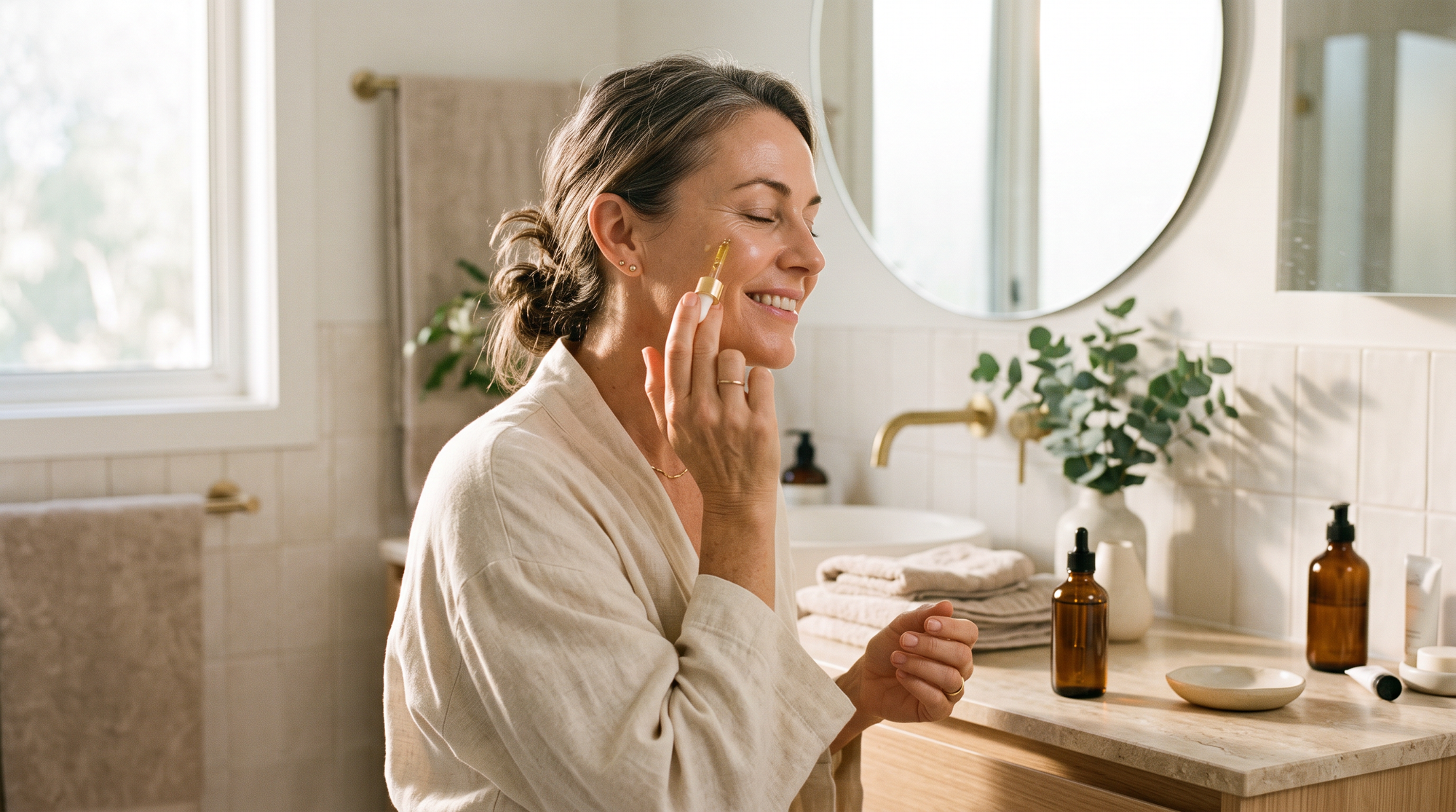
If you've noticed your skin looking puffier, duller or more reactive during a genuinely hard stretch — a brutal run at work, weeks of bad sleep, a stressful family patch — you're not imagining it. "Cortisol face" has been everywhere in wellness media this year, and while a lot of what gets said about it online is oversimplified, there's real dermatology research behind the idea that chronic stress changes how your skin behaves. Here's what the research actually says, and what's worth doing about it.
Going through a stretch of high stress? Ultra Magnesium Super Blend pairs magnesium citrate with a full spread of B vitamins, CoQ10 and turmeric, designed to support everyday muscle, nerve and energy function while your body is under load. Shop Ultra Magnesium Super Blend →
What is "cortisol face," really?
"Cortisol face" isn't a medical diagnosis — you won't find it in a dermatology textbook. It's a shorthand people use online for a cluster of things: puffiness (especially around the cheeks and jaw), dullness, breakouts that flare under pressure, and skin that feels more sensitive or reactive than usual. Cortisol itself is real enough — it's the body's main stress hormone, released via the hypothalamic-pituitary-adrenal (HPA) axis whenever your brain perceives a threat, whether that threat is a tiger or a Tuesday inbox. The "face" part is the informal, not-fully-proven leap: that visible skin changes during stressful periods are cortisol's doing. The honest answer is that stress hormones do measurably affect skin biology — just not in the single, dramatic, AI-filter way it's sometimes described.
Does stress actually affect your skin barrier?
This part has decent evidence behind it. A 2019 evidence-based review in the British Journal of Dermatology, pooling 21 studies on stressors ranging from exams and insomnia to isolation and physical pain, found a consistent pattern: psychological stress activates the HPA axis, which raises local and systemic stress hormone levels in the skin itself. That, in turn, was linked to reduced production of the lipids and structural proteins that make up your skin barrier, lower hydration in the outer skin layer, and increased transepidermal water loss — the technical term for water escaping through skin faster than it should. In plain English: under sustained stress, skin tends to hold onto moisture less well and becomes more prone to dryness, dullness and irritation. That tracks with what a lot of people report during hard periods — skin that suddenly reacts to products it normally tolerates, or looks flat and tired no matter how much sleep they're getting.
What about collagen — is stress actually "aging" your skin faster?
There's newer research here too, though it's worth being precise about what it shows. A 2025 review in Clinical, Cosmetic and Investigational Dermatology looked at psychological stress and wound healing, and found that chronic stress and elevated glucocorticoids (the hormone class cortisol belongs to) interfere with the body's ability to both resolve inflammation and lay down new collagen. One study the review cites found topical glucocorticoids cut collagen-related gene activity by around 70% and reduced collagen production by roughly 80% — a striking number, though that specific finding is about steroid medication rather than everyday stress alone. The broader point the authors make still holds: when your body is chemically stuck in "stay alert" mode, it has fewer resources left over for the slow, unglamorous work of tissue repair and collagen turnover. Over a long enough stretch, that can show up as skin that heals slower, looks less plump, and feels more fragile.
So what actually helps?
None of this means you need a 12-step cortisol-detox routine. The things that help are mostly the unglamorous basics — here's where to put your energy first:
- Protect your sleep before anything else. Sleep is when the HPA axis resets and skin repair processes are most active. If stress is wrecking your sleep, that's the root problem to solve, not a serum.
- Support your body's stress response nutritionally. Magnesium is used up faster under chronic stress and plays a role in both nervous system regulation and cellular energy production. A blend like Ultra Magnesium Super Blend is an easy, low-effort way to top it up daily.
- Work with your nervous system, not against it. Slow breathing, time outdoors and movement all help shift the body out of fight-or-flight. We go deeper on the mechanism in our piece on the vagus nerve and stress resilience.
- Give your barrier some direct support. Since stress measurably affects barrier lipids and hydration, a nourishing, fatty-acid-rich oil like our Repair Face Serum (rosehip, calendula and jojoba) can help skin hold onto moisture while the underlying stress resolves.
- Be patient with collagen. Collagen turnover is slow under normal circumstances and slower under stress. There's no overnight fix here — consistency with the first four points matters more than any single product.
Shop this article


Keep reading
- The Vagus Nerve and Stress Resilience: How to Support Your Nervous System
- The Gut-Brain Connection: How Gut Health Affects Your Mood and Focus
- Hormone-Aware Evening Routines: What Actually Helps You Wind Down for Sleep
Disclaimer: This article is general information, not medical advice. If you're pregnant, breastfeeding, taking medication or managing a health condition, check with your GP or pharmacist before starting a new supplement, and patch test new skincare before full use.
Sources: "The impact of stress on epidermal barrier function: an evidence-based review," British Journal of Dermatology, 2019;181(6):1129-1137; Mochel K et al., "The Impact of Psychological Stress on Wound Healing: Implications for Neocollagenesis and Scar Treatment Efficacy," Clinical, Cosmetic and Investigational Dermatology, 2025;18:1625-1637.