Red light, infrared, near-infrared, infrared saunas: the terms get used interchangeably, but they're not the same thing. The difference affects what a device actually does to your body, and which one suits what you're after. Here's a plain-English guide.
Want both in one device? The wireless Fringe Red Light Body Wrap combines red (660nm) and near-infrared (850nm) light across 360 LEDs. Shop the Fringe Body Wrap →
What's the difference between red light and infrared?
They're neighbours on the light spectrum, measured in nanometres (nm):
- Red light (about 630 to 700nm) is visible. It's the glow you see from a red light device, and it's mostly absorbed in the skin.
- Near-infrared light (about 700 to 1100nm) is invisible to the eye and travels deeper into tissue than red light.
- Far-infrared (well beyond 1000nm) is what you feel as radiant heat. It's what infrared saunas use.
So "infrared" can mean two very different things: near-infrared light used in red light therapy devices, or far-infrared heat used in saunas.
How does red and near-infrared light therapy work?
Red and near-infrared light therapy, known as photobiomodulation, doesn't work by heating you up. According to a 2018 review by Michael Hamblin in Photochemistry and Photobiology, the light is absorbed by an enzyme inside the mitochondria, the energy-producing part of your cells. This is thought to help cells make energy more efficiently and to trigger signals involved in repair and inflammation.
Because the two wavelengths reach different depths, they tend to be used for different things:
- Red light is mostly used for the skin. Cleveland Clinic notes it may reduce inflammation and stimulate collagen production.
- Near-infrared light reaches deeper, which is why it's commonly used in wraps and panels for muscles and joints.
Many devices combine both. In a 2014 controlled trial, people treated with red and near-infrared light had smoother skin and higher collagen density than an untreated group. The strongest evidence so far is for skin, and Cleveland Clinic says more high-quality research is needed for most other uses.
How is an infrared sauna different?
An infrared sauna uses far-infrared heaters to warm your body directly rather than heating the air. Mayo Clinic explains that this raises your heart rate and makes you sweat, similar to moderate exercise, at lower temperatures than a traditional sauna. It has been studied for things like blood pressure and joint stiffness, though larger studies are still needed.
The key difference: a sauna works through heat across your whole body, while red light therapy works through light on a targeted area. They're complementary rather than interchangeable.
Red light vs infrared: which should you choose?
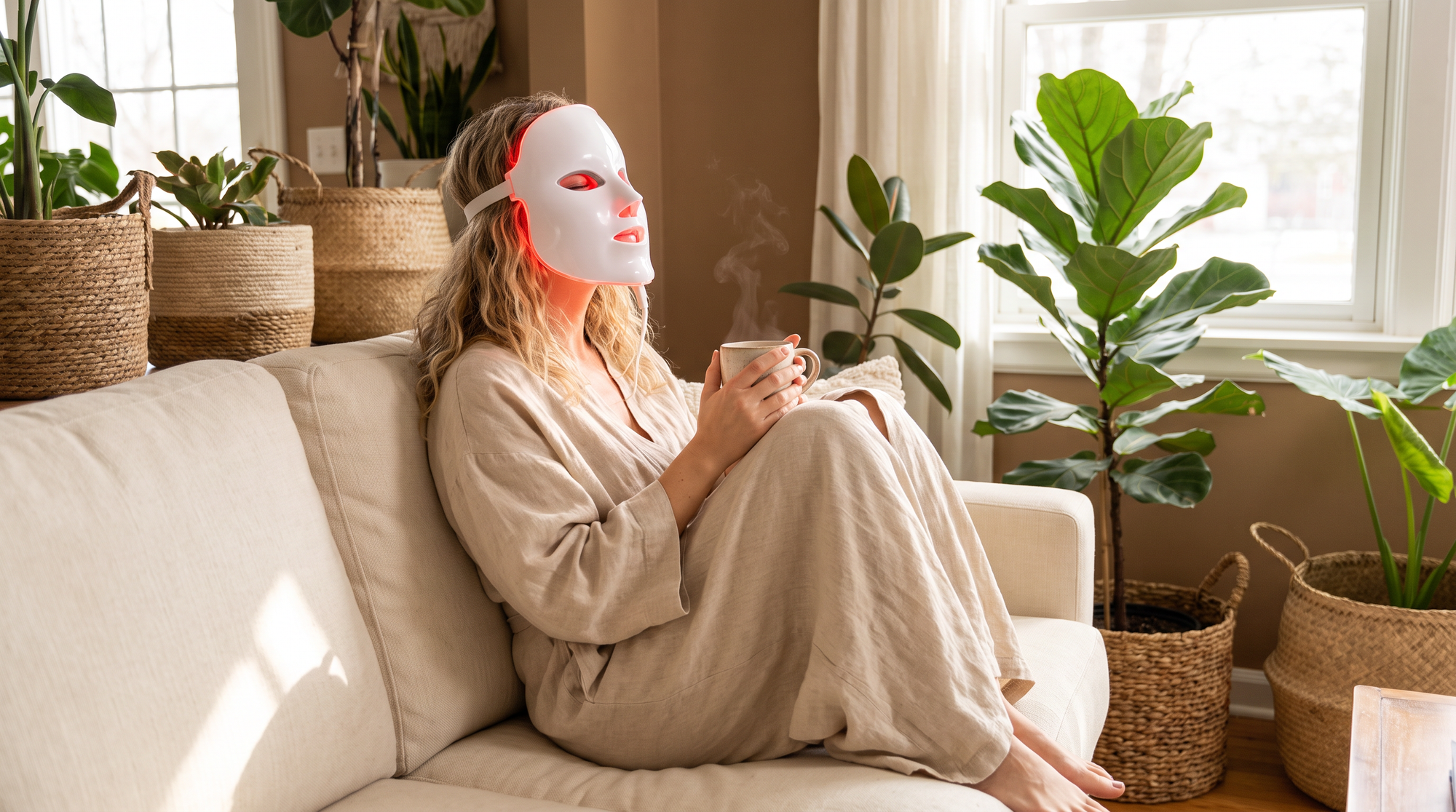
- For fine lines and skin texture: red light, often with near-infrared, in a face or neck mask.
- For a specific area like your back, knees or shoulders: a wrap that combines red and near-infrared light.
- For larger areas or the whole body: a red and near-infrared panel.
- For whole-body warmth, sweating and relaxation: an infrared sauna.
Is red light and infrared therapy safe?
Red and near-infrared light therapy doesn't use UV light, and side effects are rare. Protect your eyes (don't stare into the LEDs, and use eye protection with panels), and follow the session times in your device's instructions. Check with your doctor first if you're pregnant, have a history of skin cancer, or take medication that makes you sensitive to light. For infrared saunas, stay hydrated and check with your doctor if you have a heart condition or low blood pressure.
Shop red and near-infrared light therapy
All of Fringe's wraps and its panel combine red and near-infrared light, and the masks add blue light for the skin. Browse the full Fringe red light therapy range, or read our guide to whether red light therapy masks actually work.
Shop this article


Keep Reading
- Do Red Light Therapy Masks Actually Work? What the Research Says
- Why Muscle Matters More As You Age
- Browse our Fringe red light therapy range
Disclaimer: This article is general information, not medical advice. Red light and infrared therapies are not a substitute for medical treatment. Speak with your doctor before starting if you're pregnant, have a skin, eye or heart condition, or take medication that increases light sensitivity.